



Leather Trends Shaping 2026: What Buyers Need to Know
The global leather goods market is not slowing down — it is evolving. And if you are a buyer, retailer, brand owner, or simply someone who loves a good leather bag, knowing where the market is headed in 2026 can genuinely change the decisions you make today.
At Le Craf, we sit at an interesting intersection — a 20-year-old leather workshop in Kolkata's tanning belt, supplying customers across India and Europe. We see what buyers are asking for, what they are moving away from, and where the real opportunities are. This is our honest read on 2026.
Trend 1: Sustainability Is No Longer Optional
A few years ago, "eco-friendly leather" was a niche talking point. In 2026, it is a buying requirement — especially for European markets. Buyers in the Netherlands, Germany, and the UK are increasingly asking specific questions before placing an order: Is it chrome-free? How was it tanned? What chemicals were used?
Vegetable-tanned leather — the kind Le Craf has specialised in from the very beginning — is leading this shift. It uses natural plant tannins instead of heavy metals and chemicals. It is biodegradable. It ages far more gracefully than chrome-tanned alternatives. And it tells a better story to end consumers who care about where their products come from.
Le Craf has been vegetable-tanning cowhide in Kolkata long before sustainability became a global trend. Our in-house tannery uses no harsh chemicals — which means what is good for the environment also happens to produce better leather. That is not marketing. That is just how the process works.
What buyers are specifically asking for in 2026:
- Chrome-free and heavy-metal-free tanning certifications
- Transparent supply chains — from raw hide to finished product
- Reduced packaging and biodegradable wrapping
- Locally sourced hides with documented origin
- Carbon footprint documentation for import compliance (especially EU)
Trend 2: Personalisation Is the New Luxury
Mass production still has its place — but the direction of premium leather goods in 2026 is unmistakably personal. Buyers want their initials on their wallets. Retailers want to offer bespoke colourways. Corporate gifting budgets are going toward monogrammed leather goods that feel considered rather than generic.
Custom monogramming — debossed initials, painted edges, personalised linings — has surged by an estimated 25% in demand across both Indian and European markets in the last year alone. For brands sourcing OEM leather goods, this means a manufacturer that can handle customisation without requiring enormous order volumes is suddenly very valuable.
Popular personalisation options in 2026:
- Debossed or embossed initials and logos on wallets and bags
- Custom edge paint colours — matching or contrasting with the leather
- Personalised interior lining choices
- Bespoke hardware finishes — brass, gunmetal, antique silver
- Custom dust bags and packaging for gifting
Le Craf offers full OEM flexibility — custom designs, debossing, edge finishing, and branded hardware — with low minimum order quantities from our Kolkata facility. European buyers including brands in the Netherlands have sourced from us for exactly this reason: quality customisation without the factory-scale MOQ commitments.
Trend 3: The Styles Dominating 2026
Fashion cycles move fast, but leather goods tend to follow slower, more considered trends. Here is what is genuinely moving in 2026 — not just on runways, but in actual sales data and buyer enquiries.
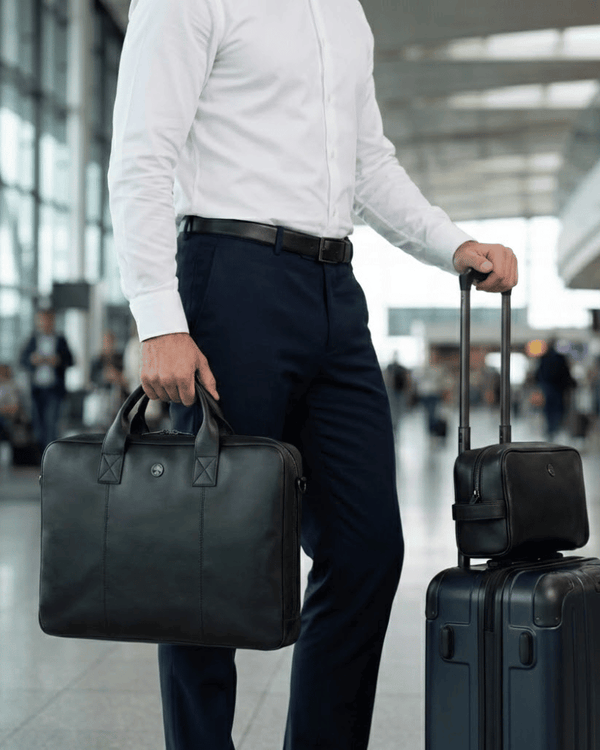
The work bag has evolved. Buyers want something that holds a laptop, a lunch box, and still looks sharp in a meeting. Structured leather totes with wide bases, magnetic closures, and interior organisation are selling consistently across India and Europe.
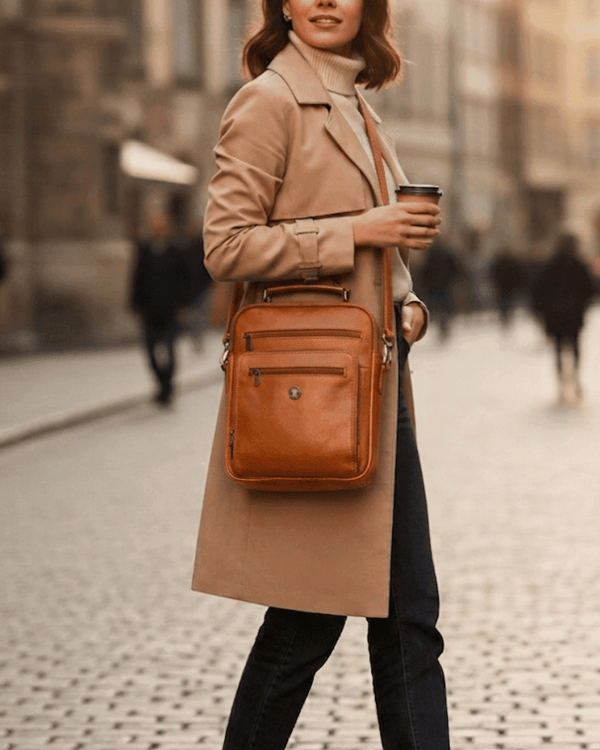
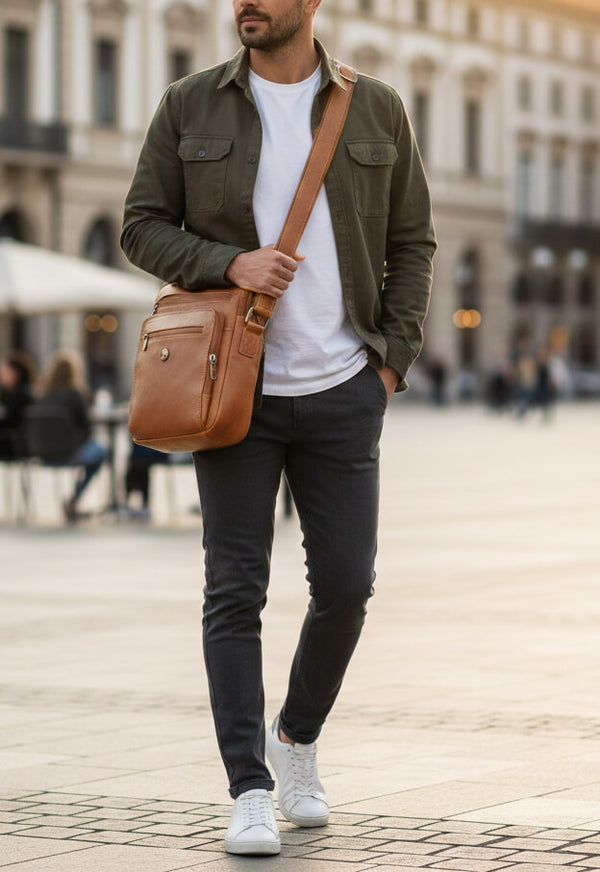
The "hands-free" generation is real. Slim leather slings that fit a phone, cards, and keys are among the fastest-growing segments in 2025–26. Clean lines, single zipper, no fuss. Indian urban buyers especially are leading this demand.
The death of the overstuffed wallet is well underway. Slim bifold and card-holder designs in vegetable-tanned leather — that develop patina beautifully — are what premium buyers are choosing. Less is more, and genuine leather makes less feel luxurious.
Bags with discreetly built-in USB pass-throughs, padded laptop sleeves, and cable management pockets are no longer a novelty — they are an expectation for professional buyers. The challenge is integrating these features without compromising the leather's aesthetic. Le Craf handles this in our OEM production.
Trend 4: Colour Story — Earthy Tones Take Over
Black is eternal. But 2026 belongs to warm, earthy tones — and the data backs this up across both Indian domestic sales and European import enquiries. The shift is away from cool, corporate colours and toward something that feels natural, warm, and considered.
Vegetable-tanned leather takes colour particularly beautifully — and the natural variation in vegetable-tanned hides means even two bags dyed the same saddle brown will have slight individuality. That is increasingly being sold as a feature, not a flaw.
Trend 5: India's Leather Exports Are Having a Moment
India has always been a significant leather producer — but 2026 is seeing something different. European buyers who previously relied on Italian or Turkish suppliers are increasingly turning to Indian manufacturers, especially from Kolkata and Chennai, for three very specific reasons: price competitiveness without quality compromise, artisan craftsmanship that European factory production cannot replicate, and the ability to produce small custom runs without enormous MOQ commitments.
| Market | What They Are Buying | Why India / Le Craf |
|---|---|---|
| India (Domestic) | Slings, wallets, everyday bags | Premium quality at fair price, local brand trust |
| Netherlands | OEM bags, branded collections | Low MOQ, vegetable-tanned, custom designs |
| Germany / Austria | Sustainable leather goods, gifts | Chrome-free, documented supply chain |
| UK | Heritage leather pieces, wallets | Artisan craftsmanship, personalisation |
| USA | Crossbody bags, tech-integrated bags | Competitive pricing, quality consistency |
Le Craf supplies directly — no middlemen, no third-party agents. That means European and Indian buyers get factory-direct pricing, direct communication with the craftsmen making their products, and complete quality control from raw hide to finished piece.
Trend 6: Premium Leather Is Going Online — and Winning
For years, conventional wisdom said premium leather goods could only sell in person — that buyers needed to touch, smell, and feel before committing. That assumption has been quietly dismantled over the last two years.
Indian leather brands with strong online presence — clear product photography, detailed material descriptions, honest storytelling about their craft — are finding that educated buyers are very comfortable purchasing premium leather online. The key is giving them enough information to trust the product before it arrives.
This is exactly why content like this matters. A buyer who understands vegetable-tanned leather, who knows what a patina is, who has read about Kolkata's tanning tradition, is a buyer who does not hesitate at checkout. They already know what they are getting.
We are building our direct-to-consumer presence precisely because the 2026 leather buyer is an informed buyer. They research before they purchase. They read about craft and material. And when they find a brand that speaks honestly about what it makes and how — they stay loyal. That is the kind of customer we want.
2026 Leather Trends: What You Need to Remember
- Sustainability leads: Chrome-free, vegetable-tanned leather is the direction — not a niche
- Personalisation pays: Custom monogramming and bespoke designs growing 25% year-on-year
- Styles to back: Oversized totes, slim slings, minimalist wallets, tech-integrated bags
- Colours to watch: Saddle brown, cognac, tan, olive green — warm earthy tones across all markets
- India's moment: European buyers moving to Indian OEM suppliers for quality, flexibility, and price
- Online wins: Educated buyers are comfortable purchasing premium leather online with the right content
Frequently Asked Questions
The biggest leather goods trends in 2026 are sustainability-led purchasing (chrome-free, vegetable-tanned leather), custom monogramming and personalisation, oversized structured totes, minimalist wallets for urban professionals, and tech-integrated bags with built-in charging pockets. Earthy tones — saddle brown, cognac, olive — are dominating across all markets.
Vegetable-tanned leather is gaining popularity because it is chrome-free, biodegradable, and produced with significantly fewer chemicals than conventional leather. As European and Indian consumers increasingly prioritise eco-conscious purchasing, brands offering vegetable-tanned goods — like Le Craf from Kolkata — are seeing stronger demand from both retail and wholesale buyers.
Yes — Indian leather, particularly from Kolkata and Chennai, is highly competitive globally in 2026. India offers premium vegetable-tanned cowhide, skilled artisan craftsmanship, competitive pricing without compromising quality, and flexible OEM manufacturing with low minimum order quantities. European buyers increasingly source from Indian manufacturers like Le Craf for these exact reasons.
Earthy, warm tones are leading in 2026 — saddle brown, cognac, tan, olive, and deep forest green. Styles trending globally include oversized structured totes, slim bifold wallets, crossbody slings for urban commuters, and minimal top-handle bags. Black remains a perennial staple but warm browns are clearly the story of 2026.
Yes. Le Craf in Kolkata offers OEM leather bag manufacturing with flexible, low minimum order quantities — making it accessible for boutique brands, independent retailers, and European importers who want quality without committing to large production runs. Custom designs, monogramming, and branded hardware are all available.
Ahead of the Trend — From Kolkata
Le Craf has been making vegetable-tanned leather goods the right way for over 20 years. Whether you are a consumer looking for a bag that lasts, or a buyer sourcing quality OEM leather goods from India — we are ready to talk.
Explore Le Craf OEM & wholesale enquiries welcome · Low MOQ · Kolkata, India